
Beyond Shining Illusions: Reshaping diamond mining and defending community rights in times of crisis
The Kimberley Process Civil Society Coalition (KP CSC) hosted a webinar on September 9, 2025, to discuss the deep disconnect between consumer perceptions of “conflict-free” diamonds and the harsh realities faced by communities in diamond mining regions. The discussion focused on concrete actions to address these challenges to ensure a beneficial and responsible diamond trade.


The webinar began where the documentary “Beyond Shining Illusions,” produced by KP CSC, ended. Its core messages were focused on challenging the diamond industry’s narrative that “99% of diamonds are now conflict-free.” It continues to argue that this claim eclipses persistent and systemic challenges on the ground in diamond-producing countries, both in artisanal and large-scale mining operations. These include human rights abuses, environmental degradation and destruction, limited transparency, and a lack of socio-economic benefits for affected communities. The coalition calls for urgent reform, going beyond marketing lines, to foster meaningful discussions and exchanges, demanding real change that will benefit communities.
The focus of the webinar was on embracing a solution-oriented approach and sharing projects and examples that are addressing challenges through concrete pathways for change. Can diamonds extracted and produced today improve realities on the ground?
The panel moderated by Danielle Keller Aviram (Truly Precious) featured representatives from different KP CSC member organizations:
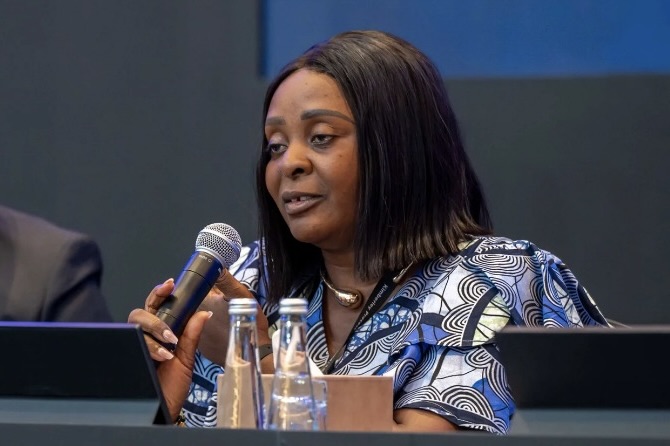
Esther Finda Kandeh, Director of WoME and advocate for women in extractives in Sierra Leone

Abu Brima, Director of NMJD and long-time KP civil society representative focusing on community rights in Sierra Leone

Adam Anthony, Director of HakiRasilimali, working on business and human rights in Tanzania
The event drew over one hundred people, representing a broad range of stakeholder groups within the diamond and jewelry industries, civil society, and diamond-affected communities.
The webinar hosted insightful discussions about how to improve diamond governance, address gender inequality, enforce stronger environmental protections, influence local and international policies, and integrate grassroots perspectives into diamond decision-making processes. United by the fundamental belief that there is an urgent need for systemic change, that local communities should be beneficiaries of their natural resources, and that their needs must be taken into account.
Esther Finda Kandeh talked about gender inequality, highlighting that opportunities exist, especially in artisanal mining. Where women engage in small businesses or mining activities, they earn money and support their families and communities. However, women are often marginalized from decision-making discussions and platforms, ensuring there can’t be an objection to any decision. They are also less likely to receive support from banks or the governmentto engage in small-scale mining. Despite these challenges, they are practical, resilient, hard-working, supportive, and collaborative, remain optimistic and solutions-oriented (through research and exchanges). This is Esther’s motivation.
An important barrier on the ground moving forward is finding people who are ready to listen, implement recommendations, and take action.
“The communities, CSOs, mining industries, and governments should sit together and share profits. We don’t want to get small money for our land. One man from a community was saying that the money they were giving him for the surface rents could not even buy a bag of rice…. So, we don’t want to get peanuts, we want to sit at the table. This is something we are pushing for,” Esther Kandeh says.
For her, it is urgent to develop clear profit-sharing plans by having affected communities, government, and mining companies sit together to negotiate and agree on an equitable distribution of profits from the people’s land.
Developing a people-centered mining approach is in need, prioritizing human rights, livelihoods, and the environment over profits. Broader and diverse discussions with multiple stakeholders are crucial. Stronger and sincere laws and regulations (at the local and international levels) will support underrepresented and neglected communities with benefits.
Abu Brima emphasized that real change requires goodwill from states and a shift in approach, focusing on a beneficial point of view towards the people. Communities must be part-owners of the minerals, providing equity in resource distribution, stopping the injustice where communities own the surface land, but the minerals beneath belong to the government. The power shift should include empowering local councils and government institutions, providing better services and law enforcement, allowing communities to hold these bodies accountable, and including compensation and crucial livelihood programs in mineral development processes.
“If there are effective decentralization processes in our countries, where local councils and local government institutions are structured and empowered to really take ownership of local services and facilities, this will create an opportunity for people to start questioning things and hold those local government institutions accountable. Compensations and livelihood matters must be included in strategic engagement so that the people will not rely solely on mining companies to take care of their livelihoods…. Mining leaves the people even poorer, making poverty entrenched in their communities.” Abu Brima
Does it make sense that governments fail to provide services and empower people despite vast underground wealth? Within the Kimberley Process (KP), states have established a global certification scheme to prevent the trade in conflict diamonds, but the mechanism is in a deadlock. Its narrow definition of conflict diamonds leaves many diamond-related harms unaddressed, but the scheme has been unable to meaningfully reform itself. Holding governments accountable might force the urgency and stress in changing the ineffective consensus-based decision-making within the KP, as a single disagreement can stall all efforts for change. A change is possible with a new mechanism, new criteria for engagement, and a new decision-making framework ensuring actions are enforced.
Adam Anthony raised the importance of voluntary initiatives and standards that better address the challenges discussed. For example, the Extractive Industries Transparency Initiative (EITI) promotes inclusive governance, broader transparency across the extractive sector, emphasizing comprehensive disclosures (like the reconciliation of payments from companies to governments, public disclosure of contracts, and revenue data) provide civil society with the evidence to hold governments and companies accountable, ensuring equitable revenue distribution, reducing corruption, and building trust. The standard also requires disclosure of social expenditure and community impacts (gender, social, and environmental provisions), allowing for public oversight.
Other tools aiming for inclusion and transparency were discussed. “Frame 7” – a nonbinding KP declaration supporting best practices for responsible diamond sourcing – is seen as a powerful advocacy instrument that communities can organize around to pile pressure on governments and companies (on issues like labor rights, human rights, environmental protection, development of local mining communities, anti-money laundering, anti-corruption, counter terrorism). IRMA (Initiative for Responsible Mining Assurance) is another instrumental tool developed with multi-stakeholder exchanges, learning, and transparency. The African Union’s Africa Mining Vision – a continental framework designed to promote equitable, transparent, and sustainable mining practices – includes provisions for community protection, environmental stewardship, gender equity, and the elimination of human rights abuses and conflict. While African states are committed to implementing these principles, the reality proves differently.
Downstream support for mining communities
A question from the audience closed the webinar: how can downstream players (designers, retailers, jewelers) support women, small-scale artisanal miners, and diamond mining-affected communities, demonstrating that they hear their challenges and wish to join in on solutions. First of all, investing in value-added minerals moves away from exporting resources in their raw form. Invest in local facilities like cutting, polishing, and jewelry making to add value. This shift creates jobs and addresses the issue where a gold-producing country’s citizens can’t afford gold. Removing resource barriers to marginalized groups by providing direct support to help them become licensed operators.
Demand responsible sourcing and accountability, eliminate practices that cause conflict, destroy the environment, or exploit workers. Be proactive, ask questions, probe, and research the traceability of minerals; otherwise, this is complicit with risky activities. Support minerals that are certified under rigorous standards, eliminate conflict-fueling elements, and ensure the labor force is respected and well-cared for. Back civil society efforts to organize and certify minerals under independent criteria to ensure trustworthiness.
Jewelers, retailers, and designers should demand that the industry associations they belong to support positive change. Even with a KP certificate, ask more questions about the true benefits of a diamond in a particular country and what the conditions for women and children are. Be vocal about risks and concerns in sourcing countries, and advocate for better governance.
Conclusion of the webinar and proposed way forward
The conversation was concluded by Danielle Keller Aviram and Jaff Bamenjo, hoping this will steer the conversation and raise people’s awareness of what role they play in these dynamics.
Governance, community empowerment, and co-ownership
- True and honest leadership/co-ownership: Resource management must embody benefits for the people, ensuring communities are included in all structures. Governments must recognize that communities own the resources, and equitable sharing/co-ownership can solve immense problems.
- Equitable representation: Multi-stakeholder exchanges must lead to equitable representation where decisions are made, ensuring citizens are part of decisions that affect them and that their human and socio-economic rights are respected.
- Responsible investment: Companies must examine the human rights record of source countries before investing and directly support women struggling in these environments.
Transparency, accountability, and monitoring
- Greater transparency: Make all facets of the supply chain visible.
- Independent monitoring: Establish stronger, independent oversight to verify practices.
- Enhanced corporate accountability: Require mining companies, industry actors, and states to uphold community rights and improve practices, ensuring benefits are divided equally (via co-ownership).
Kimberley Process and regulatory reform
- The KP challenge: Recognize that the KP’s consensus model prevents decisive action, necessitating the Coalition’s role as a pressure group to voice community concerns.
- Expanded definition: Advocate for the expanded definition of “conflict diamonds” to include systemic human rights abuses and any forms of violence, whether committed by government forces, private security companies, or mercenaries.
- Local and national regulations: Governments must introduce domestic laws and regulations to address gaps in the KP Certification Scheme, specifically concerning environmental governance, risk management, and independent auditing.
Public engagement and dialogue
- Continuing the dialogue: This webinar was a starting point to discuss ideas and opinions.
- Stronger public engagement: Continue to exchange pressing issues and solutions while sharing the coalition’s challenges and benefits using the hashtag #BeyondShiningIllusions.
Final messages to consumers, governments, and industry
Esther Finda Kandeh: “It’s important to understand that there are people behind these precious minerals living in abject poverty, whose rights have been marginalized. They need to think about how to support those communities that have been struggling and ignored. They should start to examine how the places of origin of these products adhere to human rights.”
Abu Brima: “First to authorities, they have the responsibility to empower their people and to enrich them, it’s a disgrace that they are not doing that and that the rest of the countries are so much in debt when there is money in the ground. They need to realize that the communities own the resources in the first place, and if they had access to an equitable share of the resources, this would solve many problems. To the communities, when the definition changes, they will be able to use it as an advocacy tool. If pressure is piled on the government and companies, it would allow for more accountability.”
Adam Anthony: “We cannot wait that long until the KP definition of ‘conflict diamonds’ is changed. Governments could introduce domestic laws and regulations that can start addressing some of these gaps within the KP Certification Scheme. One of the tools I found very useful in making sure communities get an opportunity to participate in governance, but also dialogues with governments and companies, is using the EITI framework.”

This activity was financially supported by the European Union. Its contents cannot be considered as reflecting the views of the European Union.