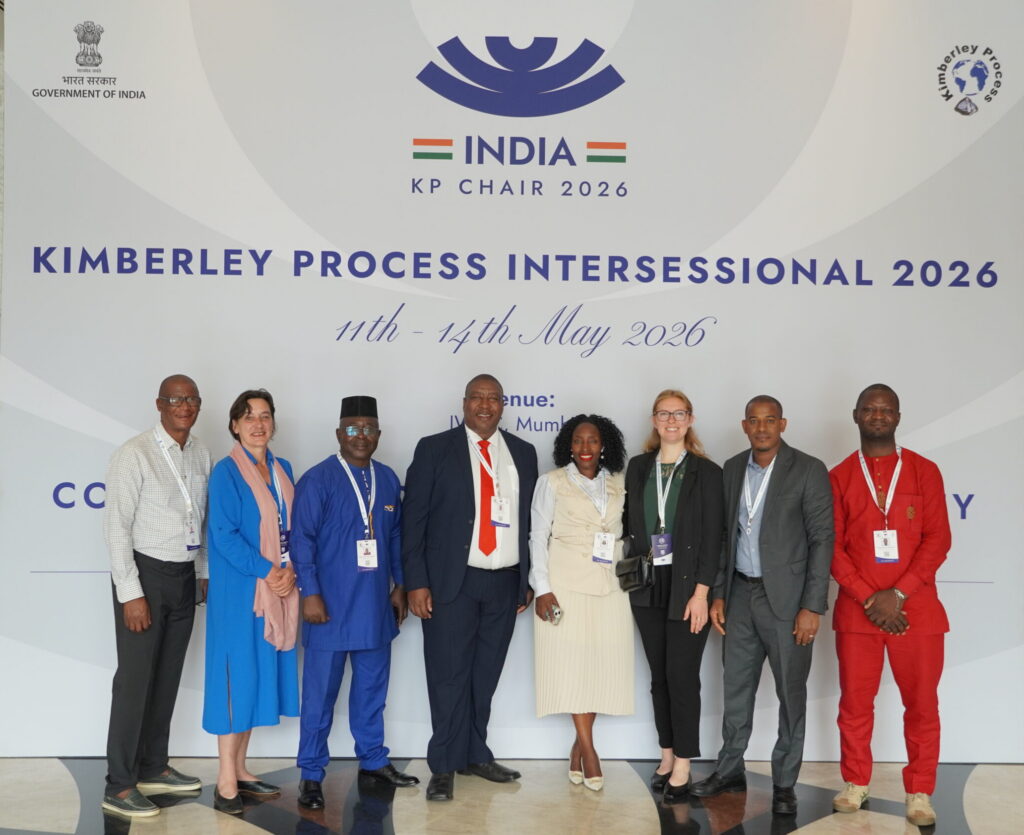

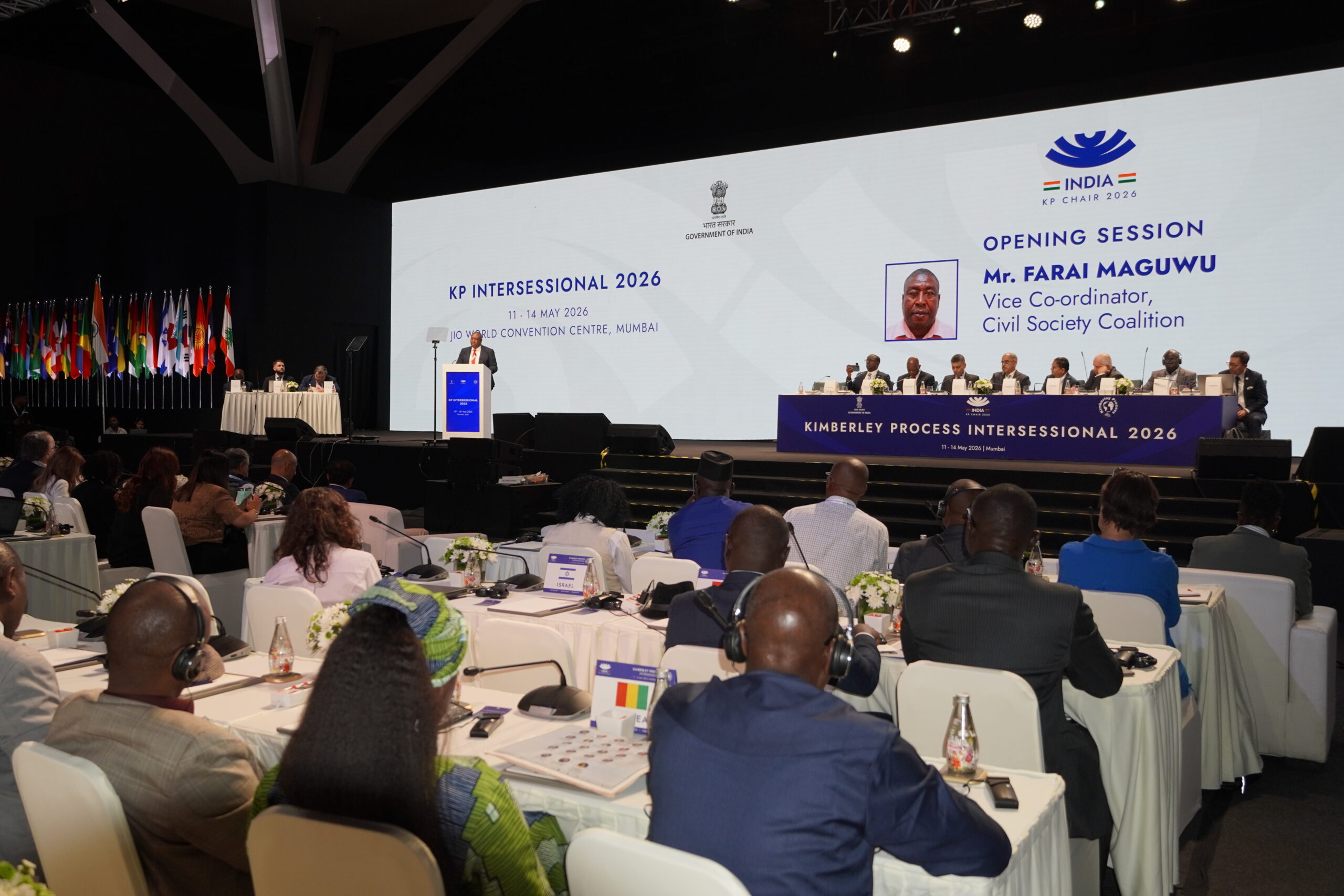
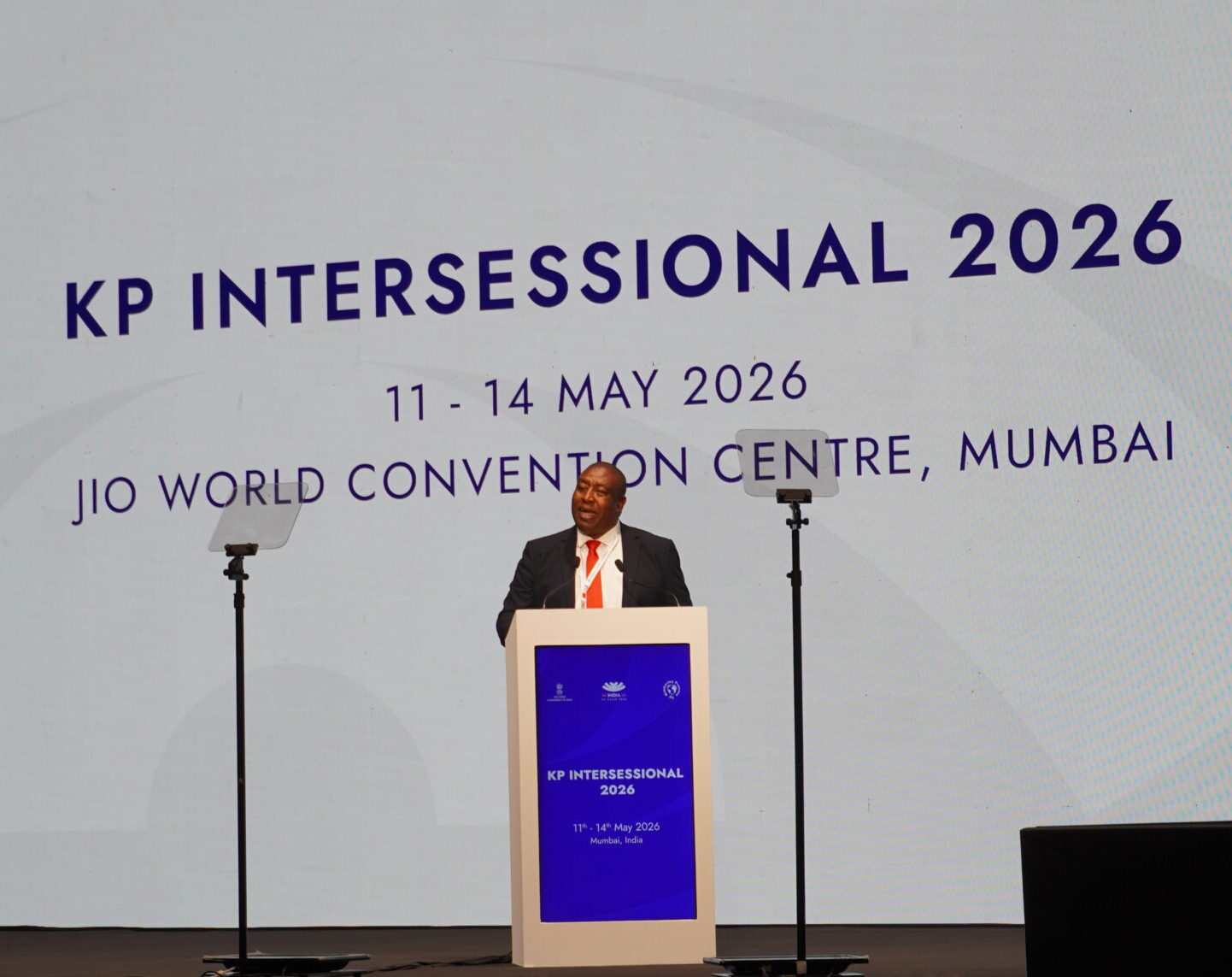
Civil Society opening remarks at the Kimberley Process Intersessional meeting in Mumbai – 11th May
After yet another failed reform cycle, the Civil Society Coalition arrives at this Kimberley Process (KP) Intersessional in Mumbai with pressing questions about the future of the certification scheme. In recent months, plummeting prices of natural diamonds and shifting consumer preferences have reignited concerns about consumer confidence. While the natural diamond industry often blames lab-grown diamonds, it tends to overlook its own persistent challenges. This should be the moment for a fundamental rethink of the KP’s role, yet many still find it hard to think beyond superficial marketing adjustments.
The Indian KP Chair has centred his 2026 mandate on three principles: Confidence, Compliance, and Credibility. With the natural diamond industry under pressure, civil society understands the focus on confidence linked to the growing expectations placed on the KP to safeguard the sector. However, such confidence can only be built on compliance and credibility. The KP must prove itself, embrace true accountability, and demonstrate full transparency to earn legitimate trust.
If a fundamental overhaul of this system remains out of reach, this Intersessional must, at minimum, deliver on three long-standing expectations.
- Confidence requires honesty
After a long series of failed reform cycles, we must, unfortunately, acknowledge that the KP is unlikely to undergo the meaningful change civil society has long called for. The definition of conflict diamonds remains outdated, failing to address contemporary forms of violence tied to diamond extraction and trade.
It is therefore essential to be clear about what the KP is: a mechanism that once contributed to curbing rebel financing, and that still provides a forum for dialogue, a basic structure for the diamond trade, and a framework to identify illicit flows – despite persistent and well-documented loopholes. Clear-eyed and honest communication about the KP’s limitations is essential to avoid misleading consumers or further eroding trust.
- Compliance requires delivery
If the KP is to retain any role in responsible diamond governance, it must meet the most basic expectations anyone would have of a scheme that claims to ensure a conflict-free and responsible diamond trade.
KP Participants should go beyond avoiding embargoes or meeting the KP’s very minimal requirements. They must deliver on the commitments outlined in Frame 7, the KP Declaration on Responsible Diamond Sourcing, adopted in 2021. These commitments cannot remain just words on paper. They must be integrated into the KP’s peer review and reporting mechanisms for KP participants to actually live up to them.
Compliance should also be considered as a continuous process. A progressive but transparent approach should be adopted in the fight against illicit flows; one that acknowledges problems and drives gradual improvement, rather than ignoring them.
- Credibility requires transparency
For three consecutive years, the KP has failed to adopt a Plenary communiqué – a basic element of public accountability on the proceedings of the KP. To avoid this from happening again during the Plenary in November, work must start now.
Transparency must also go further: peer review and annual reports of KP Participants should be made publicly available.
Credibility cannot be built on empty promises. Convincing brands and consumers of the credibility of KP certificates requires concrete and meaningful actions.
The KP can prove its relevance by ensuring that diamonds deliver real benefits to communities. In many places, natural diamonds’ integrity still needs to be built before it can be advertised. Natural diamonds do provide employment and livelihoods for thousands of people as well as revenues for States in producing countries. Yet, significant gaps remain in protecting human rights, environmental standards and equitable economic benefits. If the KP wants to support the benefits it attributes to diamonds, it should actively promote:
- Transparency on diamond revenues and their distribution.
- Community participation in decisions on how those revenues are used.
- Value addition in producer countries, ensuring that local economies capture greater benefits.

Securing legitimacy: Higher standards and effective implementation
With these fundamentals in place, the KP can begin to move beyond the stalemate that has paralysed the system for years, and refocus on protecting people rather than defending its own reputation.
To safeguard its legitimacy in doing so, the KP should:
- Invest in the professionalisation of the process: The establishment of a Secretariat was a positive and much needed step that should be sustained and further developed.
- Revive efforts to support the Artisanal and Small-Scale (ASM) sector, including through re-engagement with and implementation of the commitments outlined in the KP Washington and Moscow Declarations – two declarations that respectively aimed to improve internal controls over alluvial diamond production and integrate the development of ASM within the KP implementation.
- Promote higher standards in mining, including a move beyond self-reporting for large-scale mines by promoting credible, independent audits to drive continuous improvement in addressing social, environmental, and human rights impacts.
Securing real improvements on the ground, while remaining transparent about ongoing challenges, is critical for the KP to be relevant again.
Traceability: Beyond buzzwords
Finally, traceability is increasingly presented as a solution to the KP’s reputational challenges. Civil society stresses that:
- It is not a quick fix. Digitizing KP certificates does not equate to traceability.
- Traceability can only be a tool to conduct due diligence, not an end in itself.
- The question of cost remains unresolved, with a risk of shifting the burden upstream while benefits accrue downstream.
- Solutions must be co-designed with all stakeholders, including the most vulnerable ones, particularly to avoid excluding the ASM sector.
Traceability must be paired with accountability and ensure that communities benefit from the investments in more transparent supply chains.
Promoting natural diamonds should mean safeguarding livelihoods and maximizing development outcomes in producing countries – not just referencing communities in marketing narratives. Let’s take the steps needed to ensure diamond-affected communities truly benefit. We have to take it where it begins. Real credibility starts in the communities.
This week, we expect progress on these basic expectations regarding transparency and responsible sourcing standards. Let’s work toward a more relevant, accountable, and credible Kimberley Process that could rebuild legitimate trust in natural diamonds.
Farai Maguwu
Vice-Coordinator of the KP Civil Society Coalition
For more information: info@kpcivilsociety.org